
Ulrike Grossarth – School of Lublin
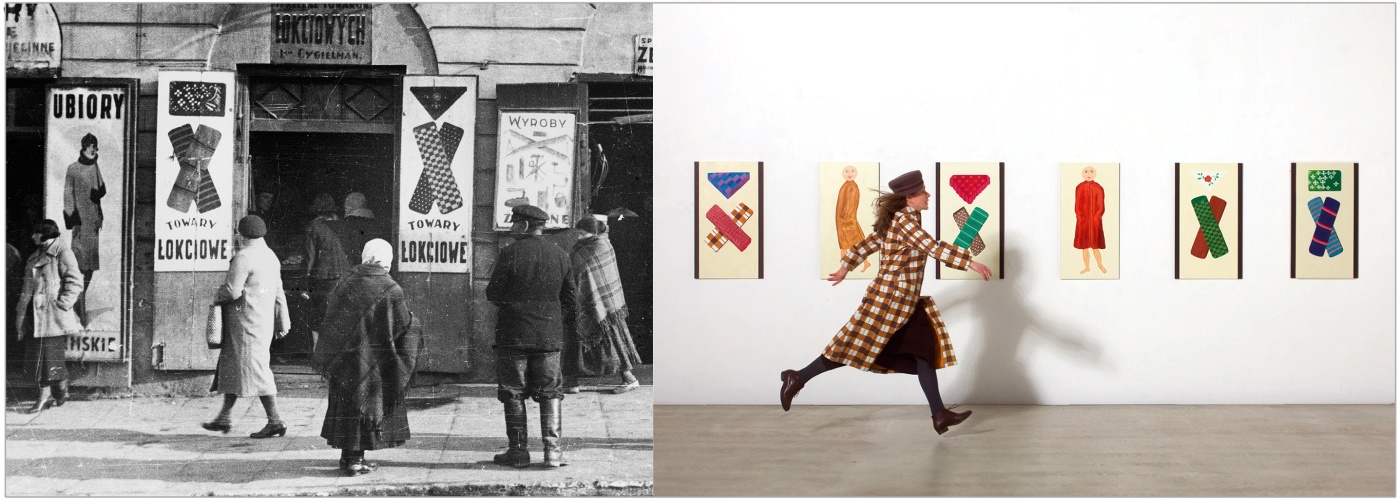
Ulica Nowa 17, Lublin, 1930s,
Photo: Stefan Kiełsznia
running Lubartowska, Dresden 2010,
Photo: David Brandt
Since 2006, I have been initiating projects in Lublin that relate to the city’s history and its Jewish heritage. The project The School of Lublin borrows its name from the Jewish scholarly tradition, but uses it metaphorically. In this context, physical presence on site and pure observation plays a role.
It involves a practice of interweaving various cultural, geographical, and intellectual-historical strands as a vivid presentation of European cultural archives.
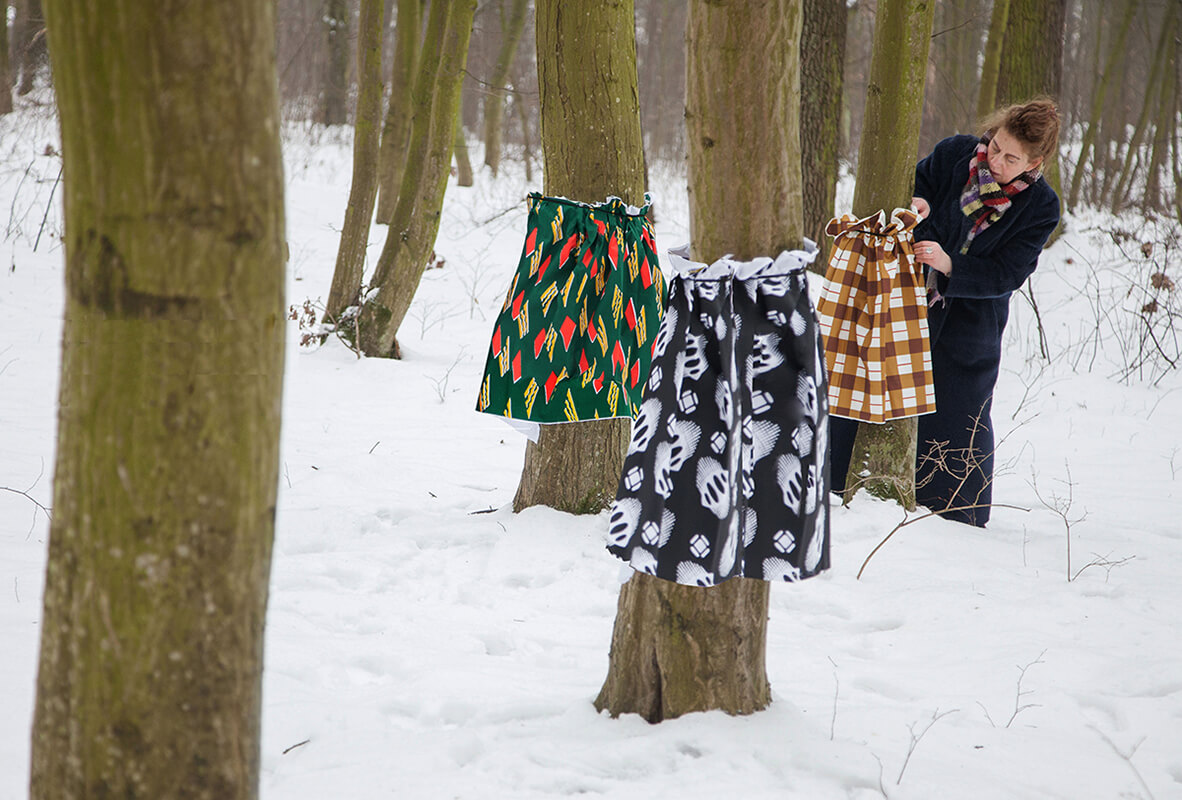
Lublin Forest, Marcin Butryn, 2016
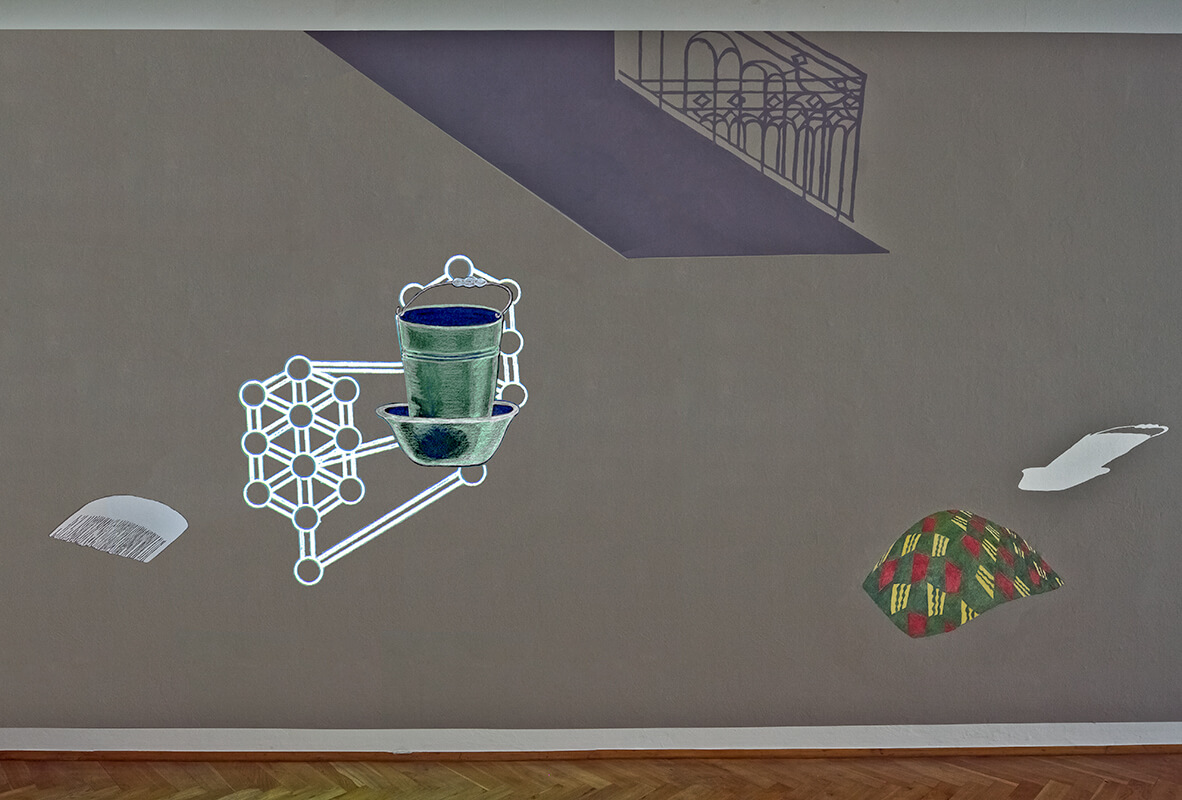
Szeroka 28, wall drawings and projections,
Badischer Kunstverein,
Karlsruhe, 2023
Primary sources from which the projects are developed:
Collections of visual and literary motifs, photographs, posters, newspaper clippings, photographic research findings from Central and Eastern European regions, and the illustrated volumes of Diderot & D’Alembert’s Encyclopédie from 1751, which are associated with the seminal work of the Enlightenment.
In addition, the study of the Talmud (online) in the Daf Yomi (daily page) format, a method of learning developed in the early 20th century by Meir Shapiro in Lublin.
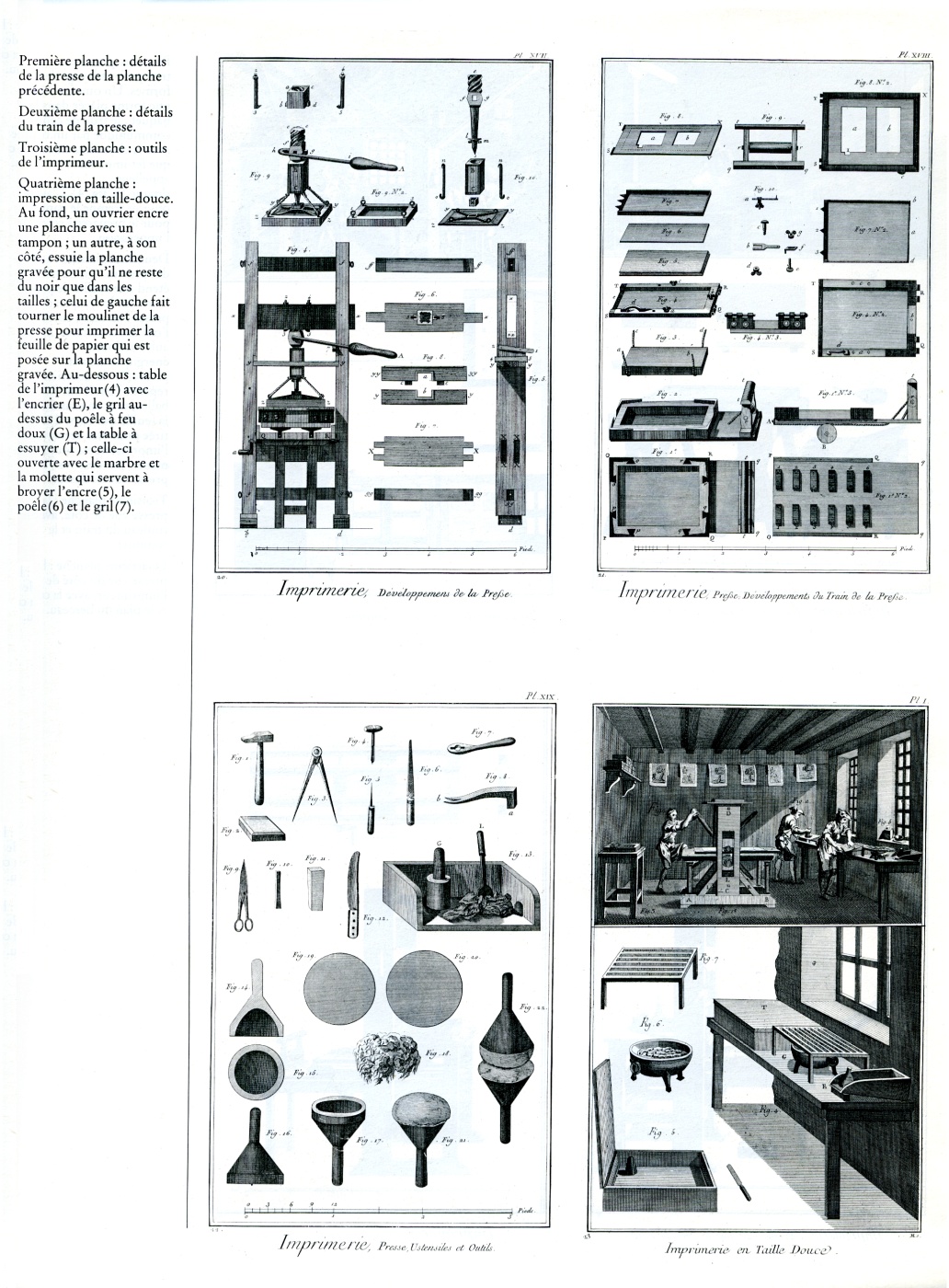
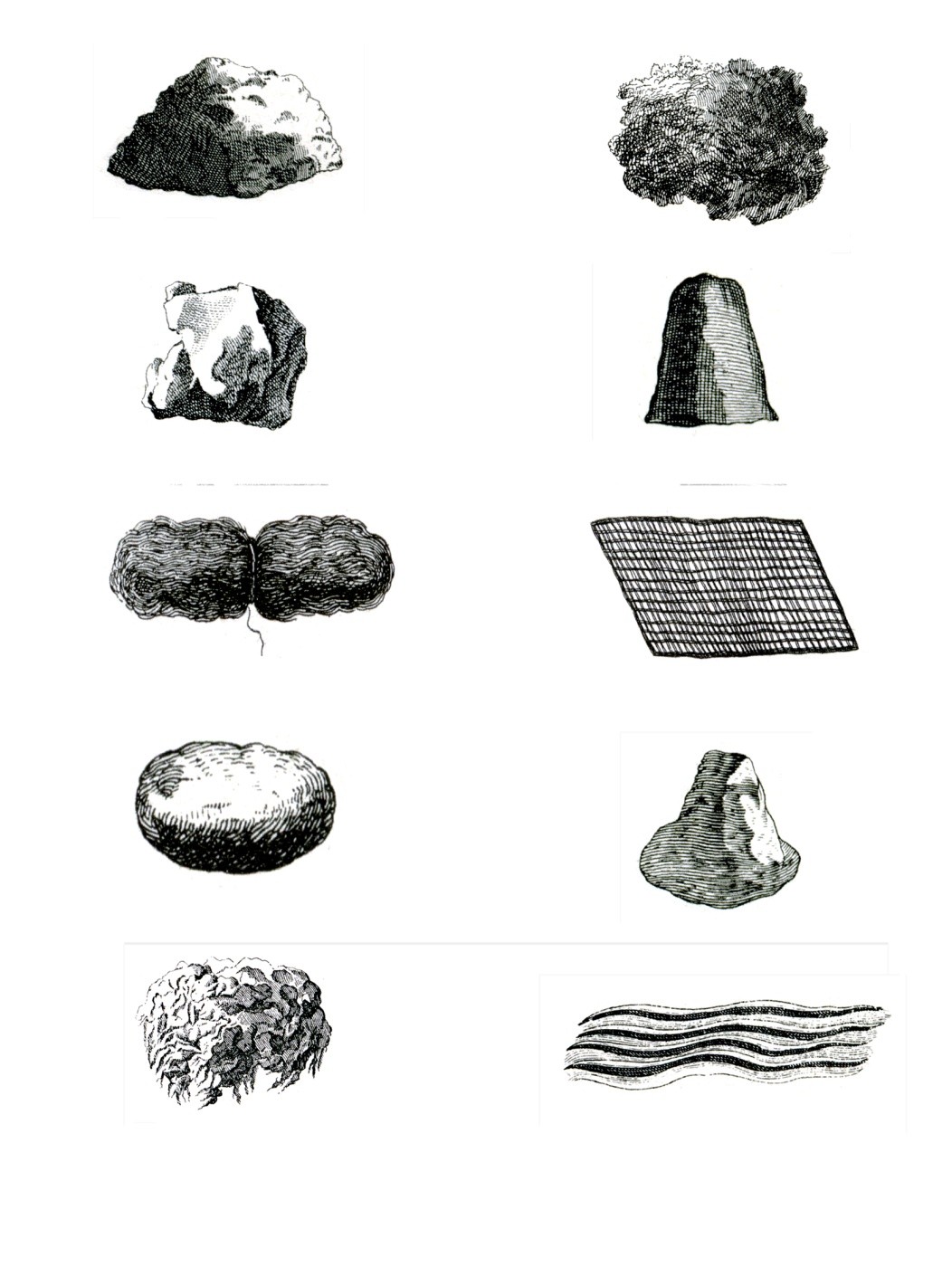
‚Imprimerie’ and ‚Parcheminier’ from ‚Diderot und D’Alembert, Encyclopédie, Paris 1751
Remains, elements from the Encyclopédie
The juxtaposition of Western and Eastern European “cultural preserves”, gives rise to an environment in which categories multiply, thereby allowing traditional models of thought to be expanded.
The intention is to unlock the distinctive characteristics of the participating elements in such a way, that they form connections on their own and create a cultural milieu. In addition to texts and visual media such as drawings and projections, this encompasses the development of symbols, allegories, and figures, that also have a role in performative formats and stagings of social events.
A key motivation for this stems from the observation, that the social reserve toward Central and Eastern Europe evident in the West, leads above all to a lack of authentic inspiration for Europe as a whole.
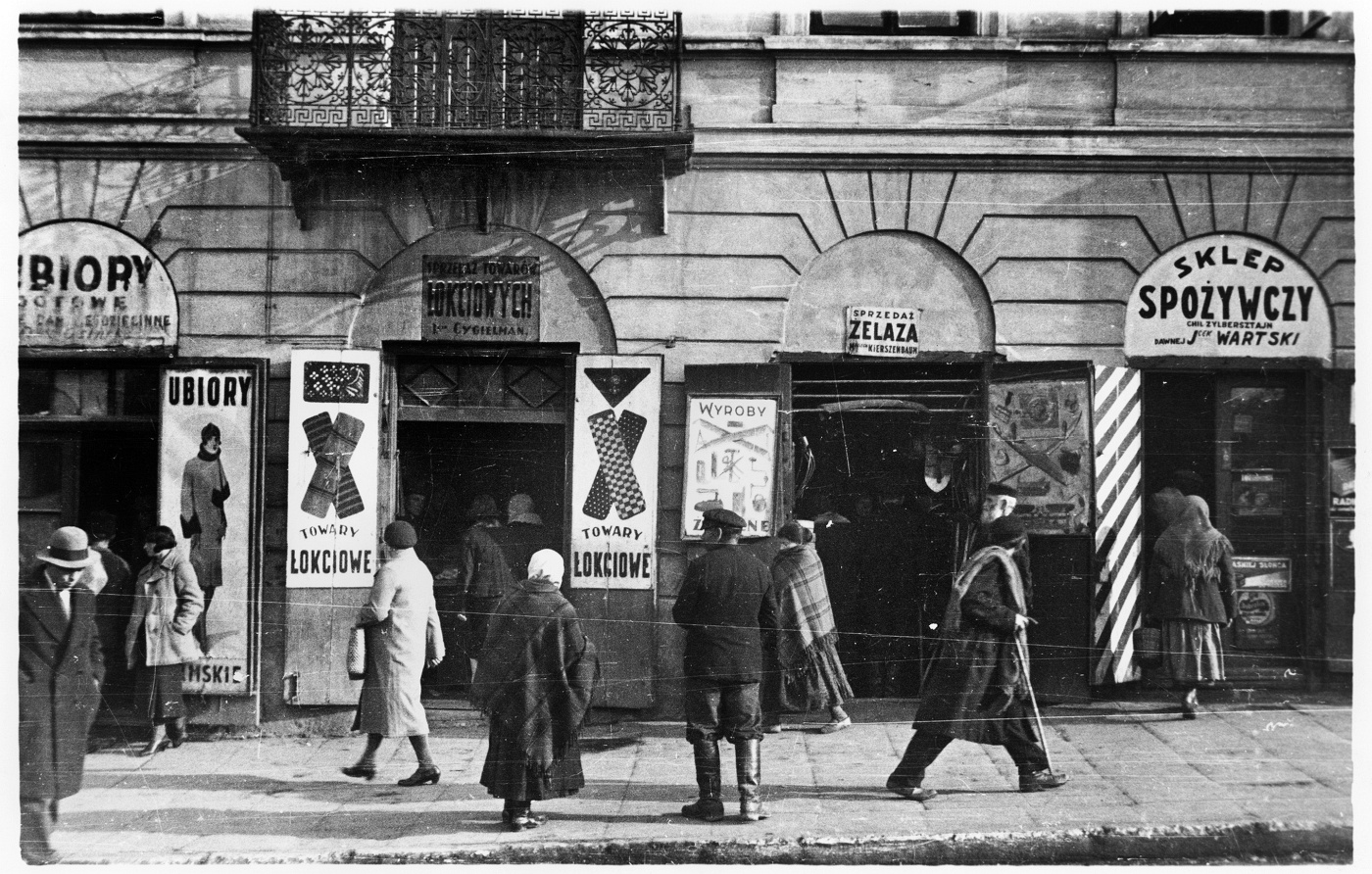
17 Nowa Street, Lublin, 1930s,
21 Nowa Street, Lublin, 1930s,
Photos: Stefan Kiełsznia
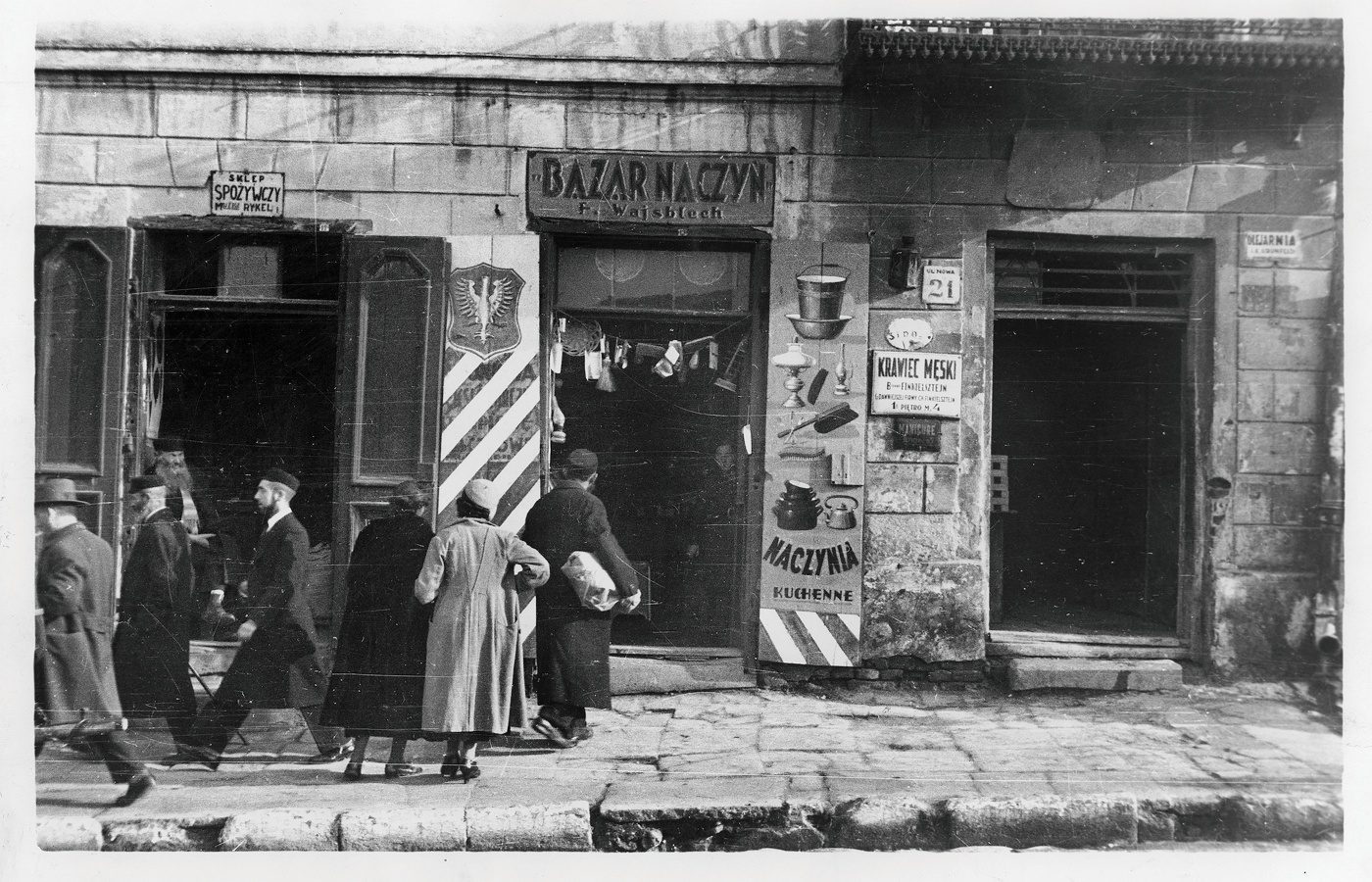
The Photo Archive of Stefan Kiełsznia
In 2006, I discovered the photographic work of Stefan Kiełsznia in Lublin. It bears witness to a multi-ethnic phase of natural coexistence in interwar Poland.
Visible is an extraordinary wealth of urban scenes, that offer insight into the city’s economic situation during the interwar period. For example, the hand-painted depictions of goods suggest an economy that was still small-scale and fragile. I am interested in the layering in the images as levels of meaning that prepare the ground for the barter process.
Through the archaic markets still existing in Lublin, the theme of barter is ever-present. One can, for example, observe the paradoxical attributions of properties and qualities described by Alfred Sohn-Rethel, which pertain to a commodity before and during the exchange of goods and to the moment of exchange—that is, the handing over of the commodity in exchange for its equivalent in the form of money.
In the trading projects, this irrational, momentary intermediate state within the seemingly causal processes of commodity exchange is thematized as a highly intense “vacuum” and slowed down in temporal duration in order to seek strategies for other possible follow-up actions.
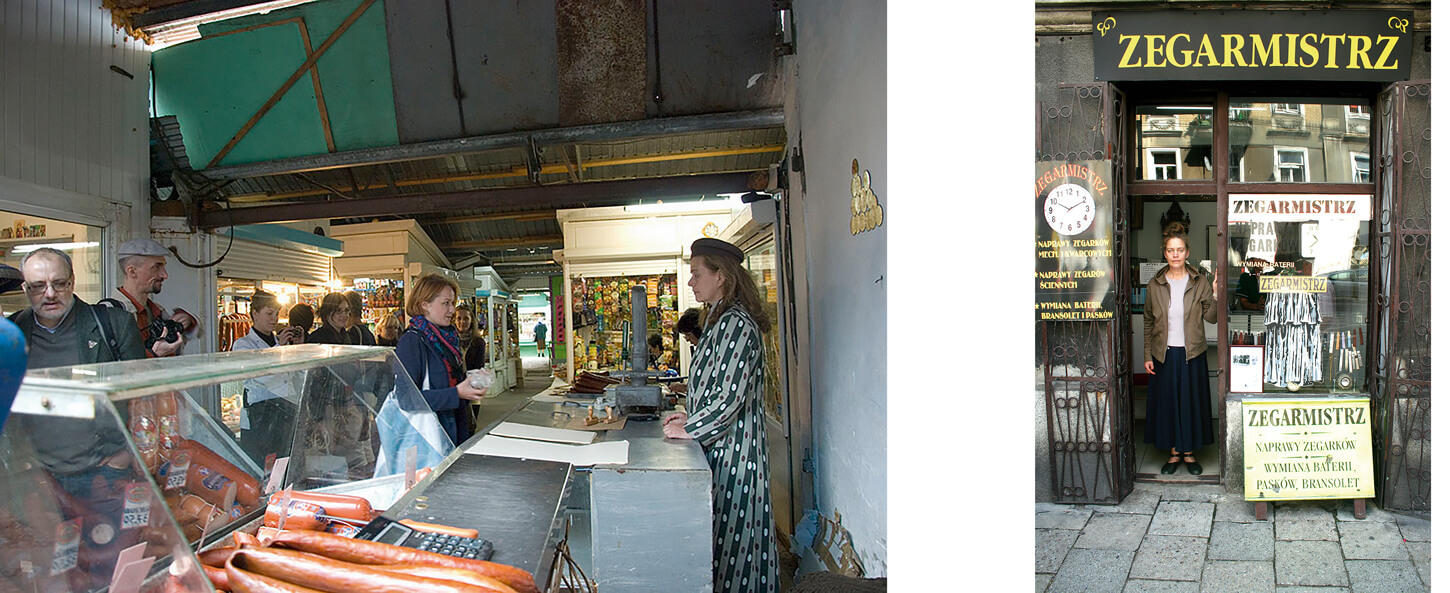
Project SYMBOL gotowe/ trading in Drohobych,
(Ukraine) 2012
Word-skirt at the “Zakład Zegarmistrzowski”
store during the Bławatne z Lublina project, Lublin, 2011
Subject / Subiekt
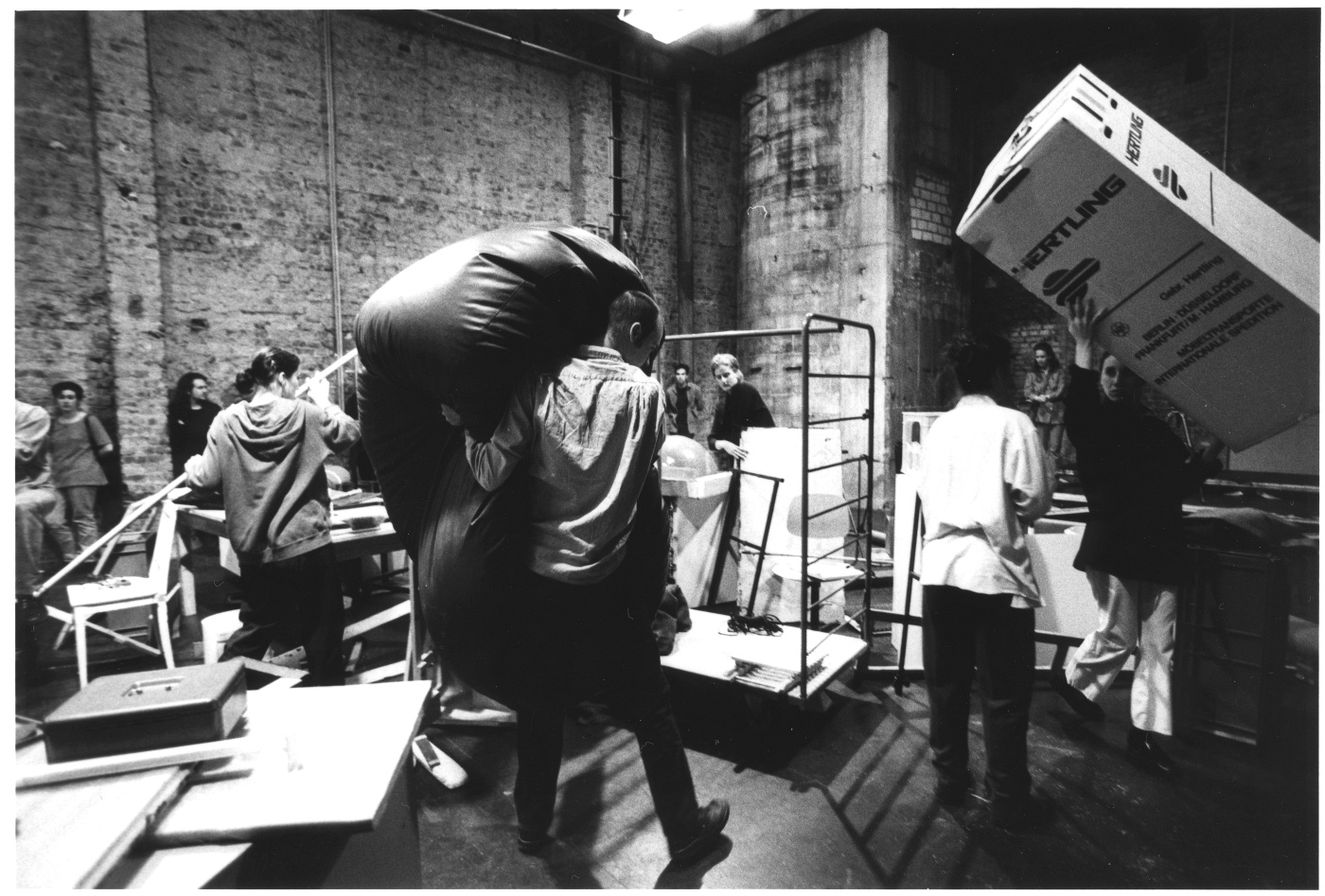
Subject of Study, Bavarian State Theater,
Munich 1999
Hand Studies, Berlin
This also ties back to my visualizations of pseudo-economic models and fictional exchange actions during the public exercises of the 1990s in Berlin. There, too, the focus was on the question of value creation as an abstract construct that manifests itself in everyday practice as a social “illusion”.
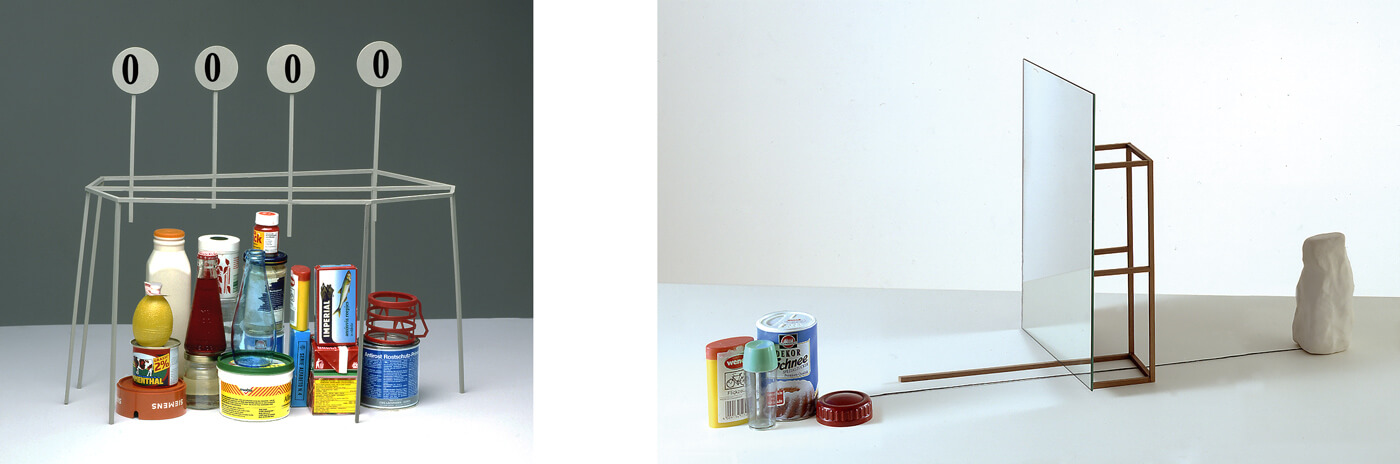
Idealbed, model, detail from BAU I, Berlin 1988–1999
Added Value, model, Berlin 1994
Even back then, I was particularly interested in elements that constitute the subject, elements derived from or associated with economic contexts. I considered a remark by Hannah Arendt to be an important indication of this: that only the person who holds a commodity ready for exchange in the public sphere is regarded as a social subject.
The connection to the Polish context arose through a crucial reference for me, namely the Old Polish term “subiekt,” referring to the intermediaries between customers and goods- that is, the people who carry out barter trade.
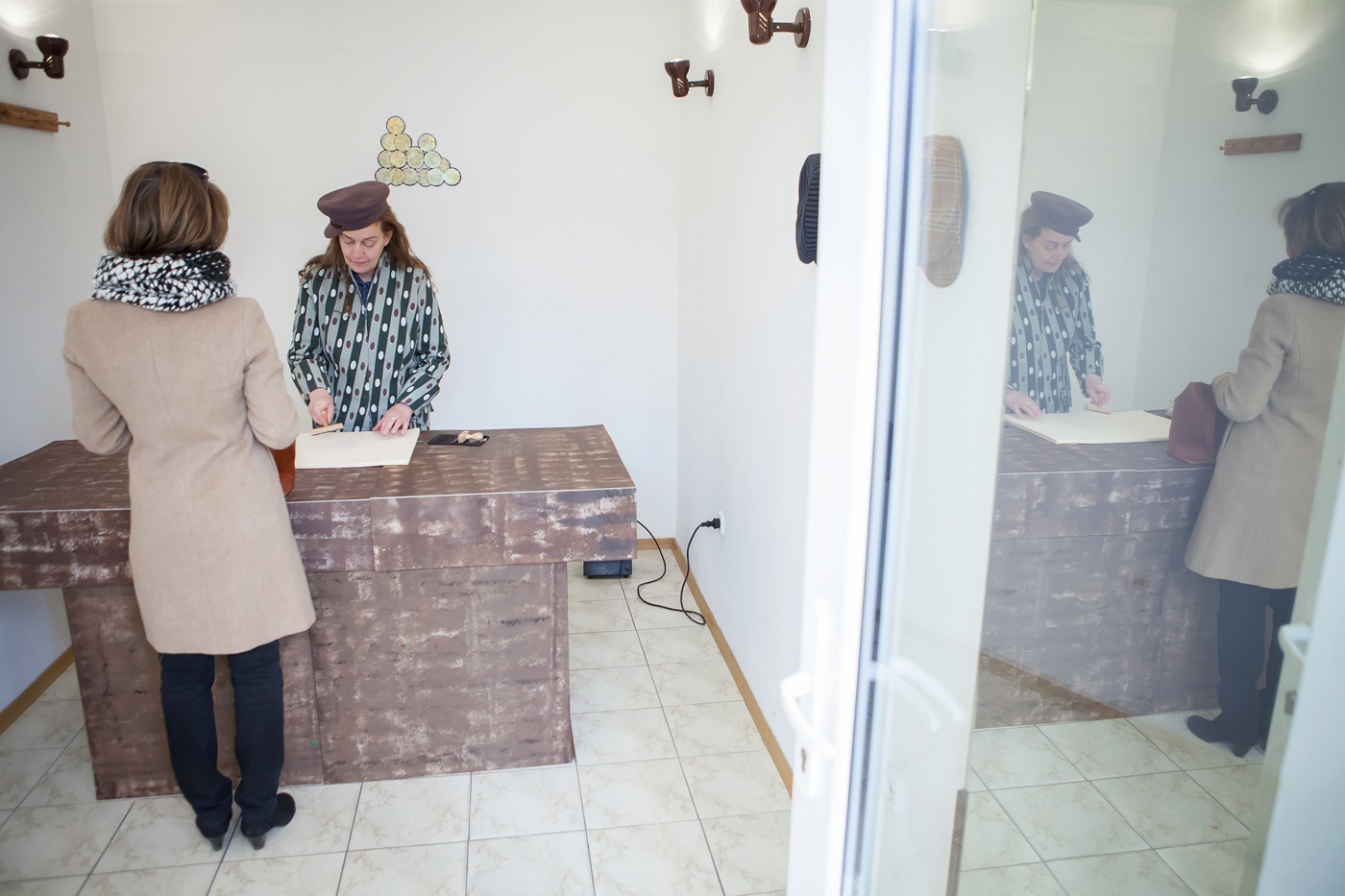
SYMBOL gotowe/ trading, Lublin 2015
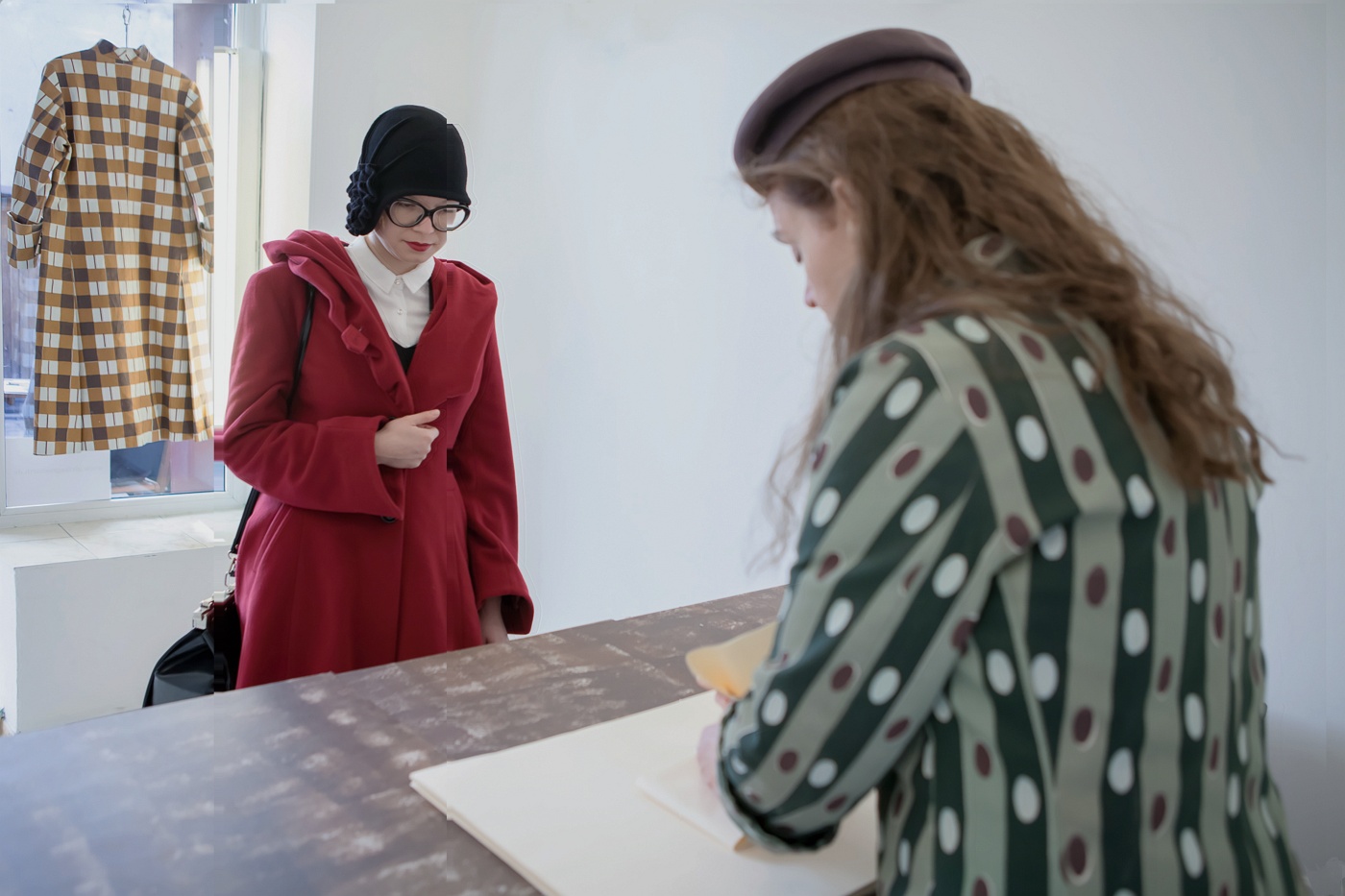
SYMBOL gotowe/ sklep
In 2015, I rented a former Jewish tailor’s workshop in Lublin’s Old Town,
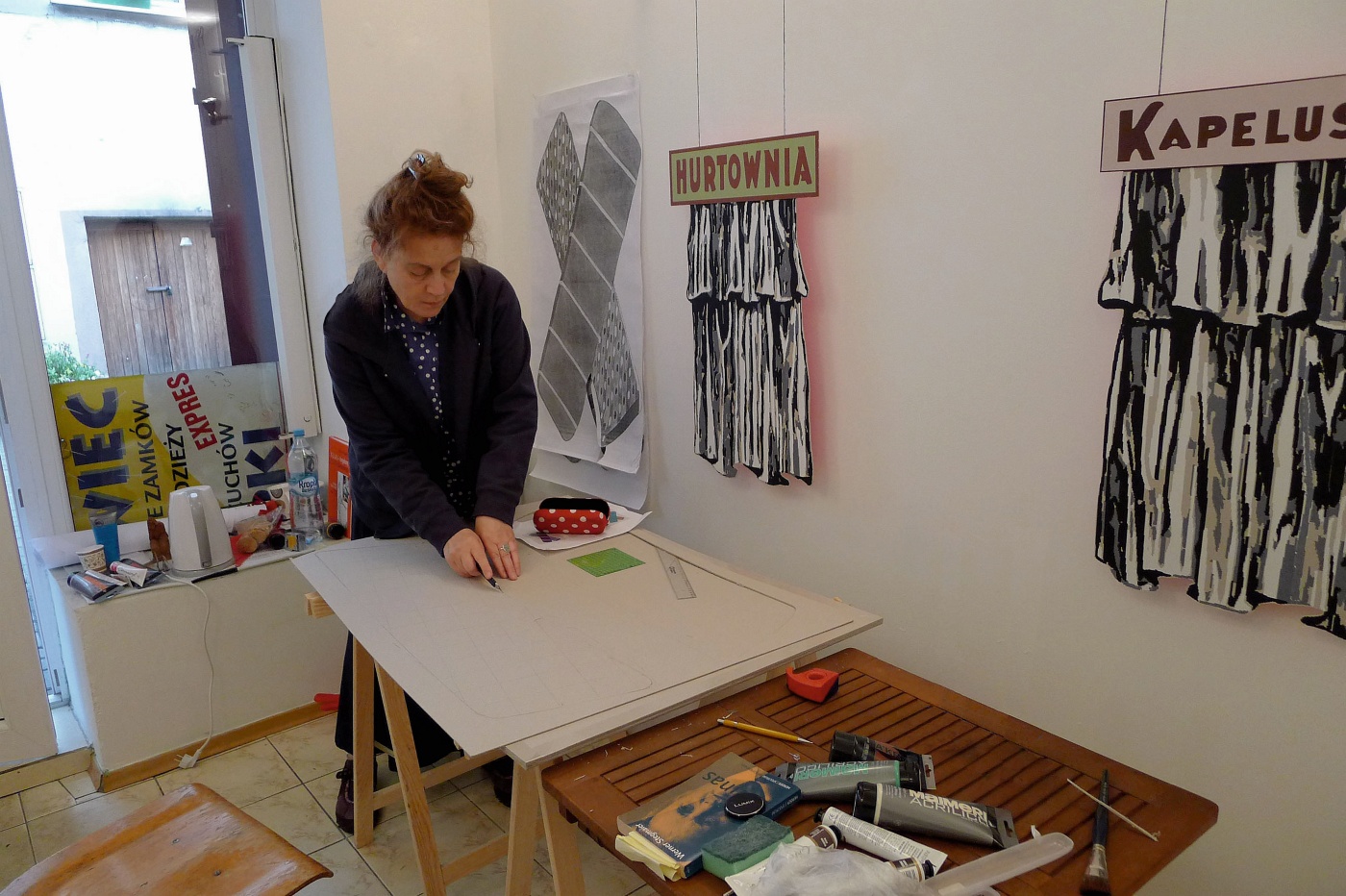
located in a courtyard off Lubartowska Street. Alongside other small shops, I created a space under the name SYMBOL gotowe/ sklep (gotowe > ready, sklep > shop) for temporary interventions and exhibitions, often lasting only a few hours.
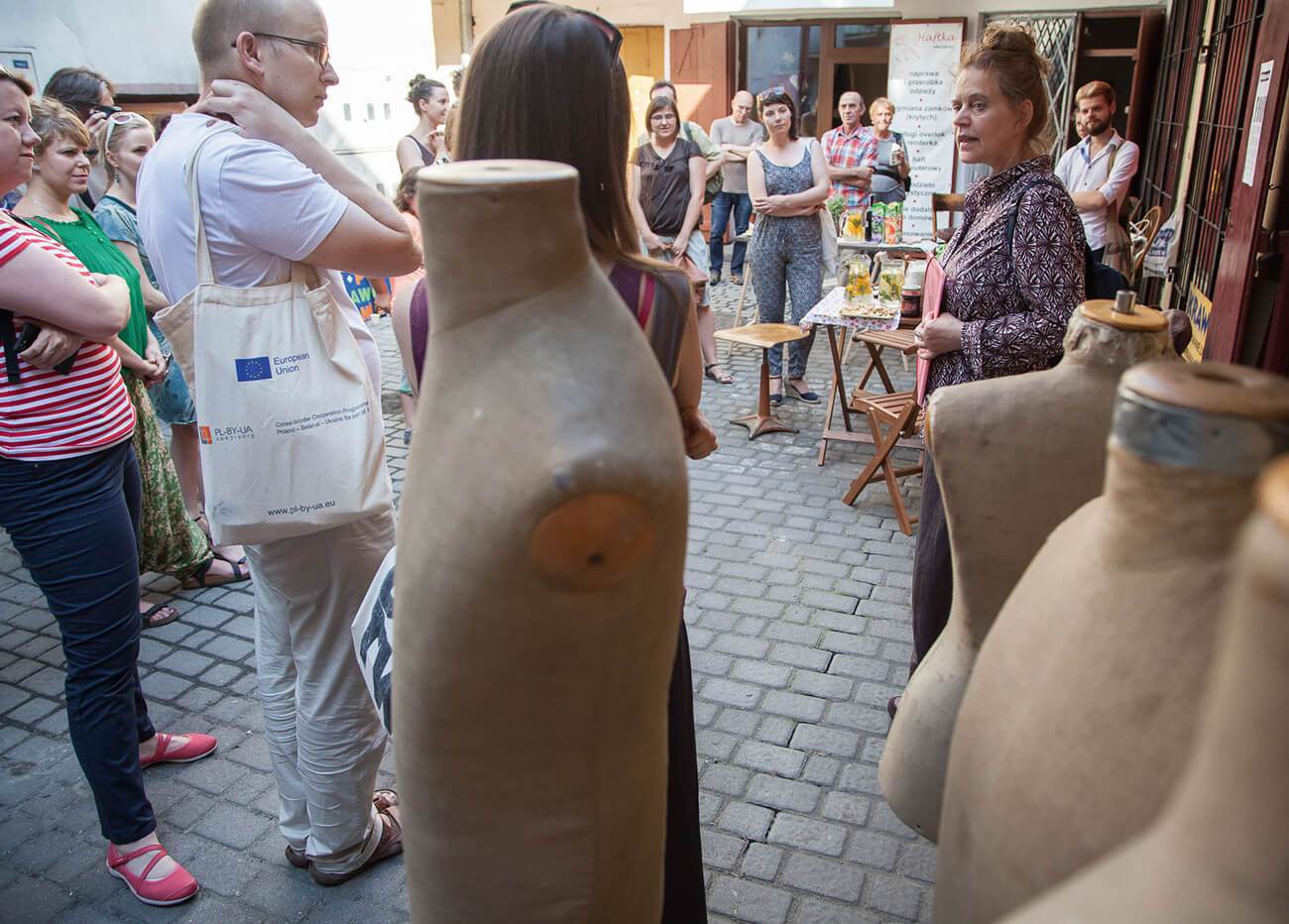
The thematic concerns were addressed through the diversity of perspectives and the productivity of a growing group of people in Lublin. Especially against the backdrop of increasing nationalist tendencies, we jointly formulate criteria for the dynamization of culturally ingrained resentments and the impossibility of an idea of “objective identity.”
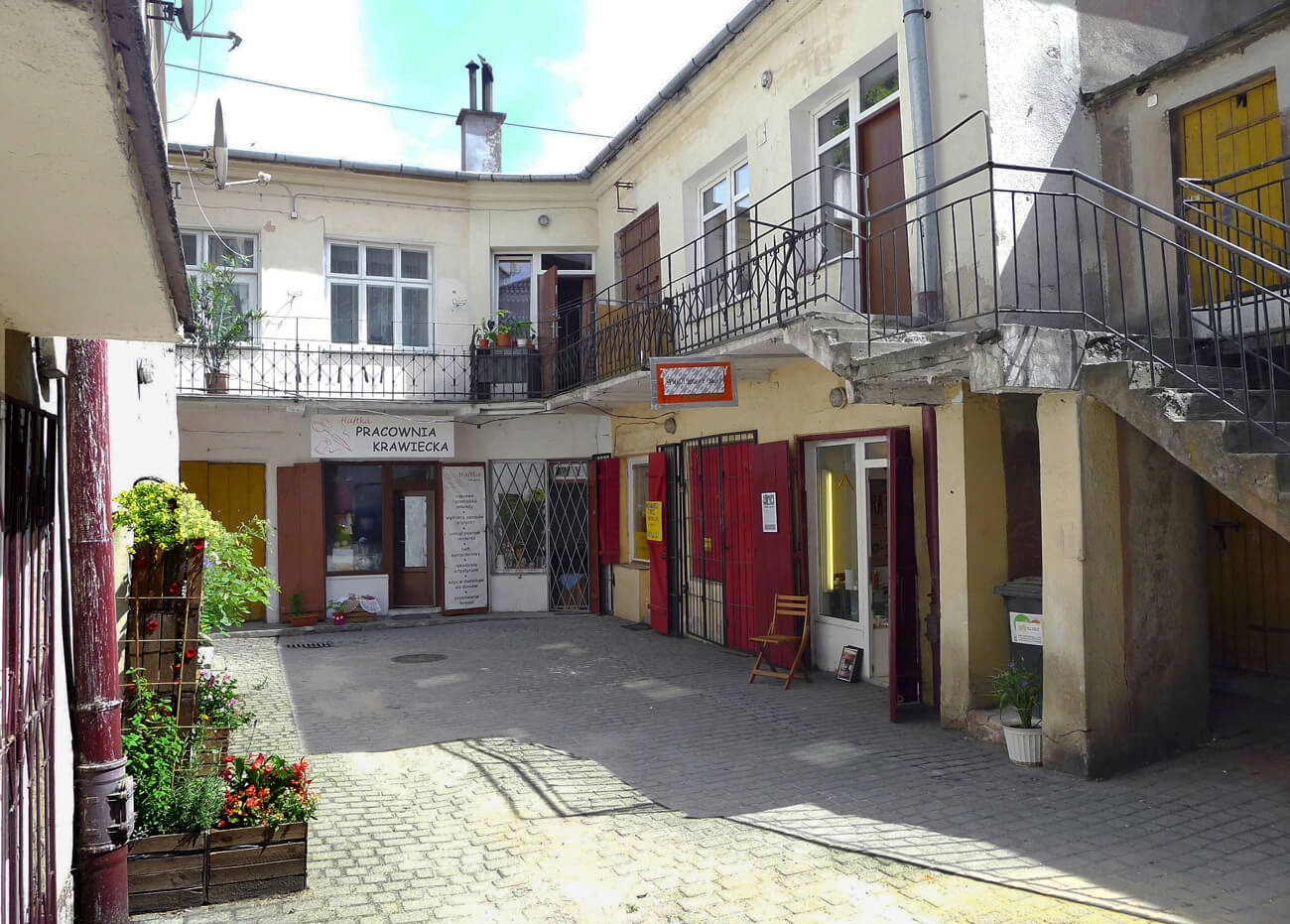
The courtyard at 31 Lubartowska Street, Lublin 2017
Seminar and exhibition vacated space,
Lublin 2017
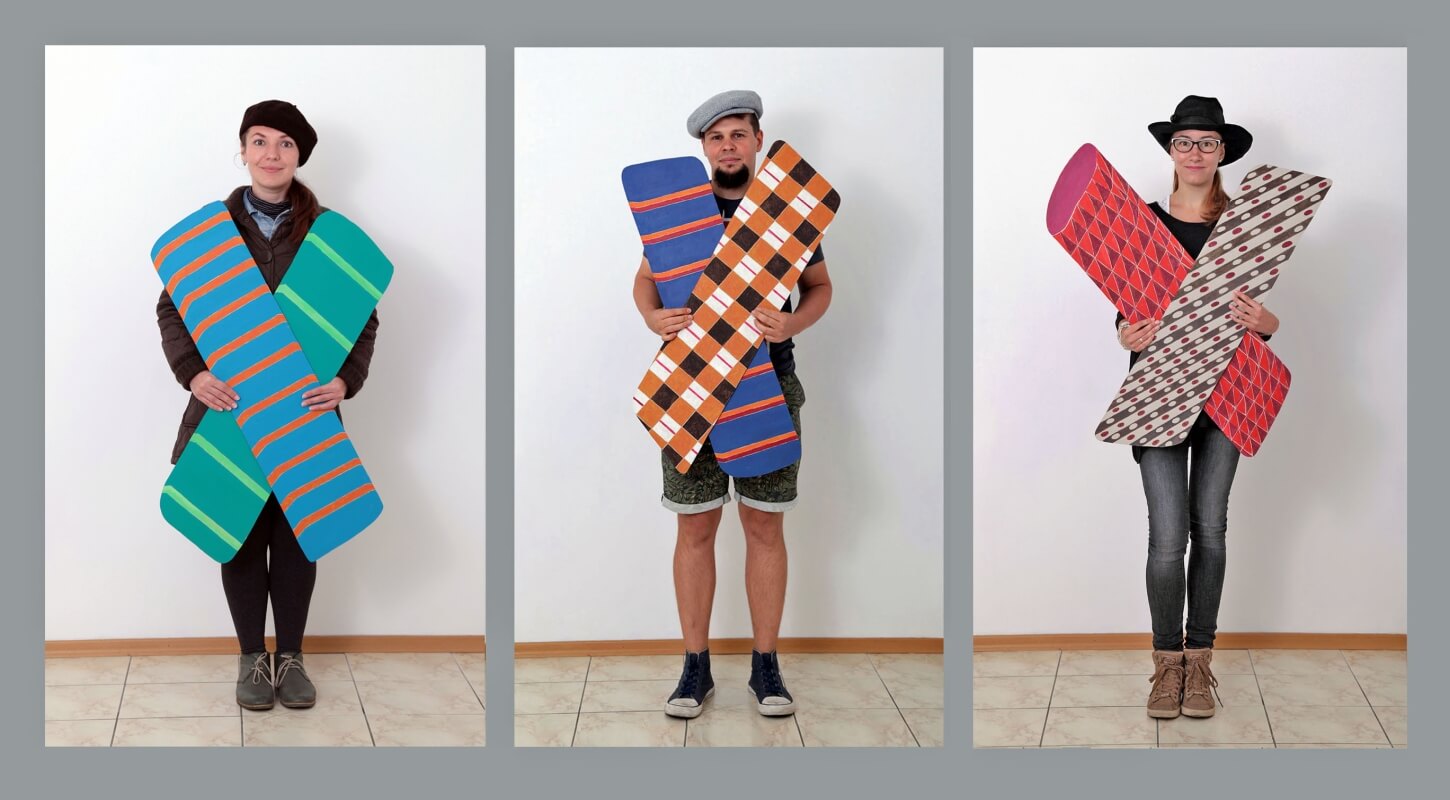
X Lubliners
Project X Lubliners,
Lublin 2016, photo series featuring 70 residents of Lublin
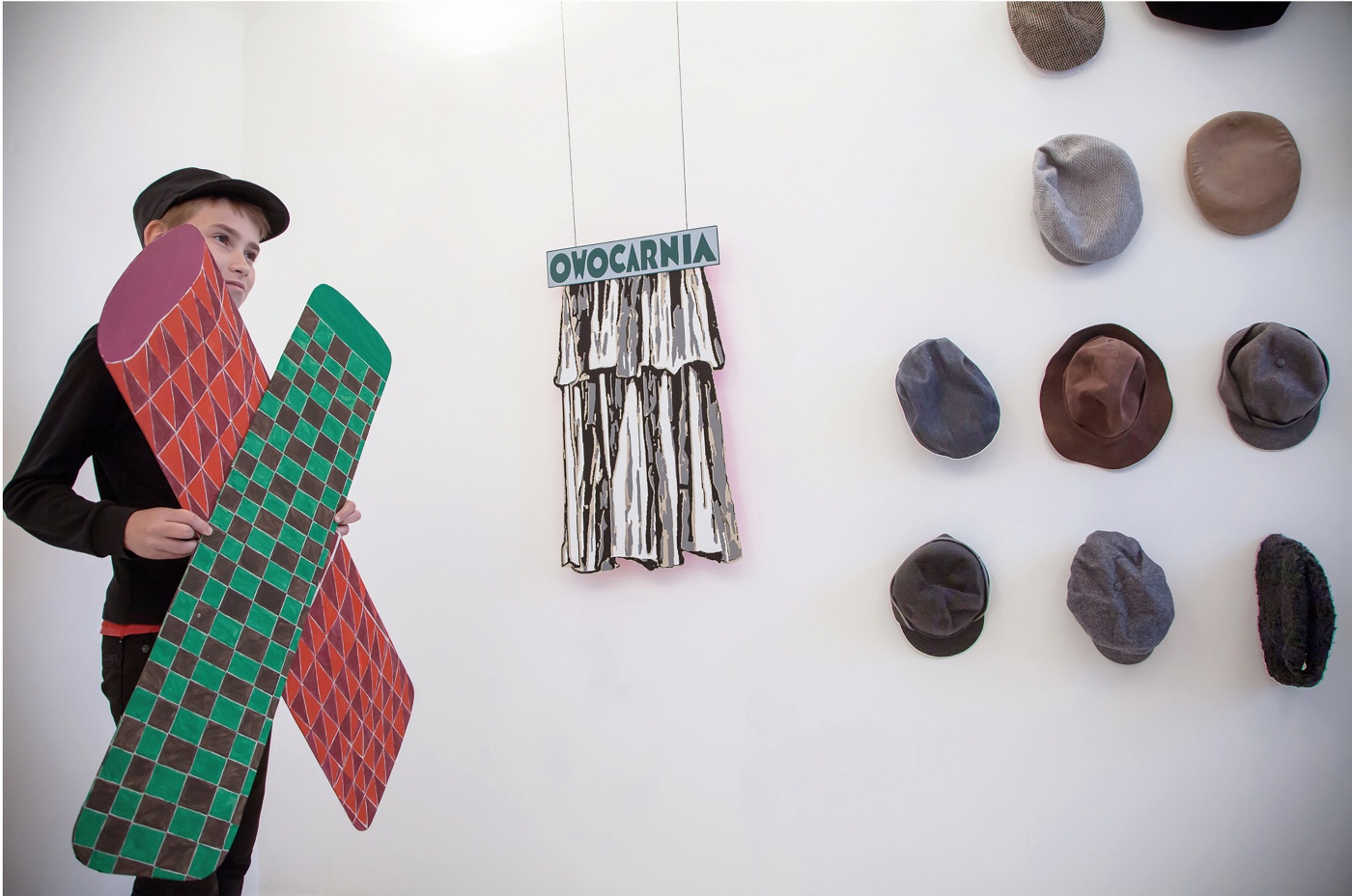
For the project X Lubliners, I returned to the first elements that caught my eye in Stefan Kiełsznia’s photos: the recurring X-shaped arrangement of merchandise.
Using image panels colored in various versions of Lublin patterns,
the participants each selected two and held them, joined together with both hands, in front of their bodies for the moment the photograph was taken.
Their conscious awareness of the metaphorical nature of the situation was reflected in the openness of their personal expression. A convergence of historical and cultural aspects takes place, held – in the truest sense of the word- by the participants, who stand for them. This moment creates a presence of the absent within a living situation.
Esther and Ruth/ The Eye of the Needle
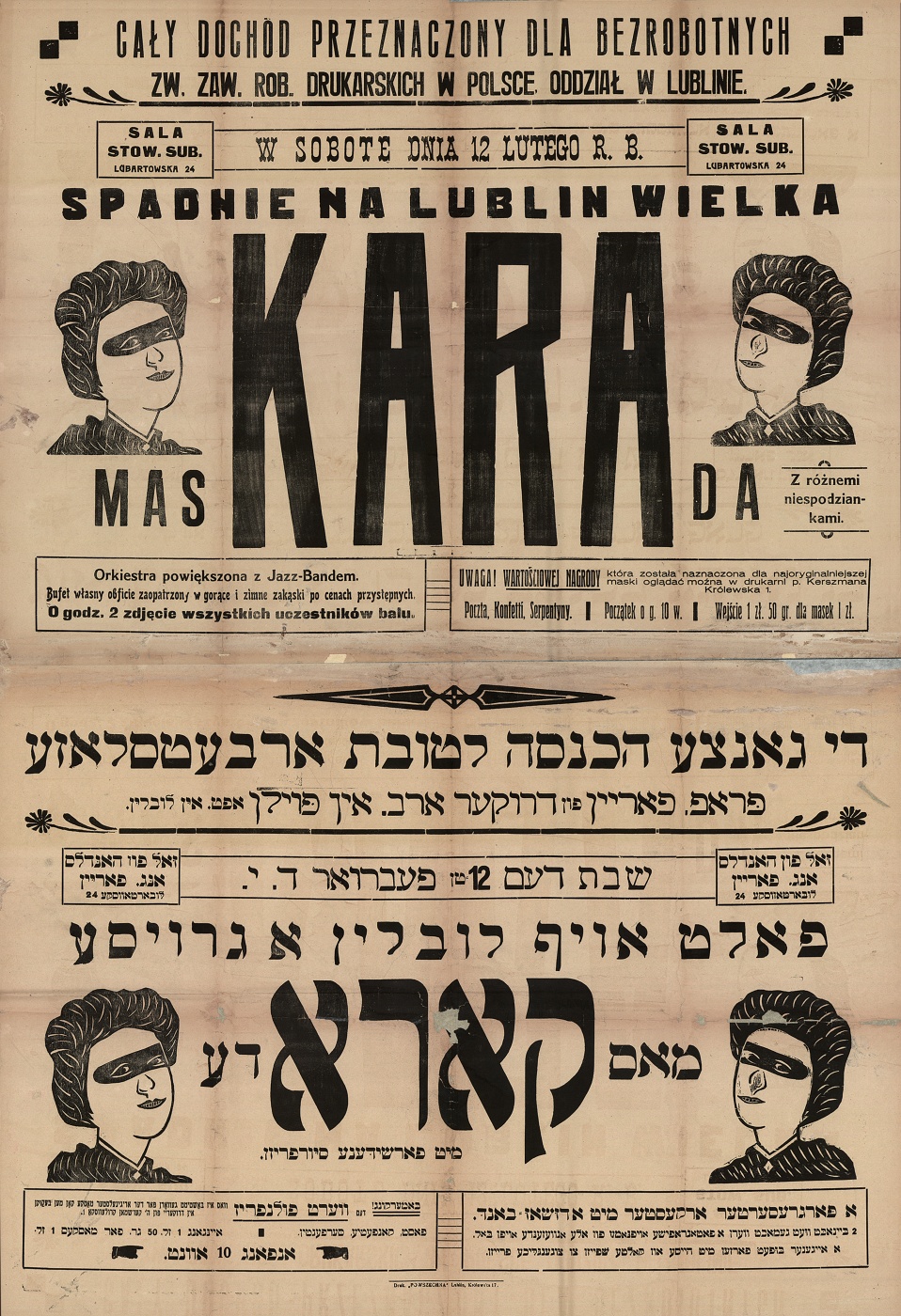
The discovery of a poster from Lublin dating to 1927 sparked a series of applications
The portraits of two Yiddish women wearing masks, inviting people to a Purim masquerade ball, yielded multifaceted applications and, in the background, shed light on the economic and cultural problems facing the Jewish community during those years.
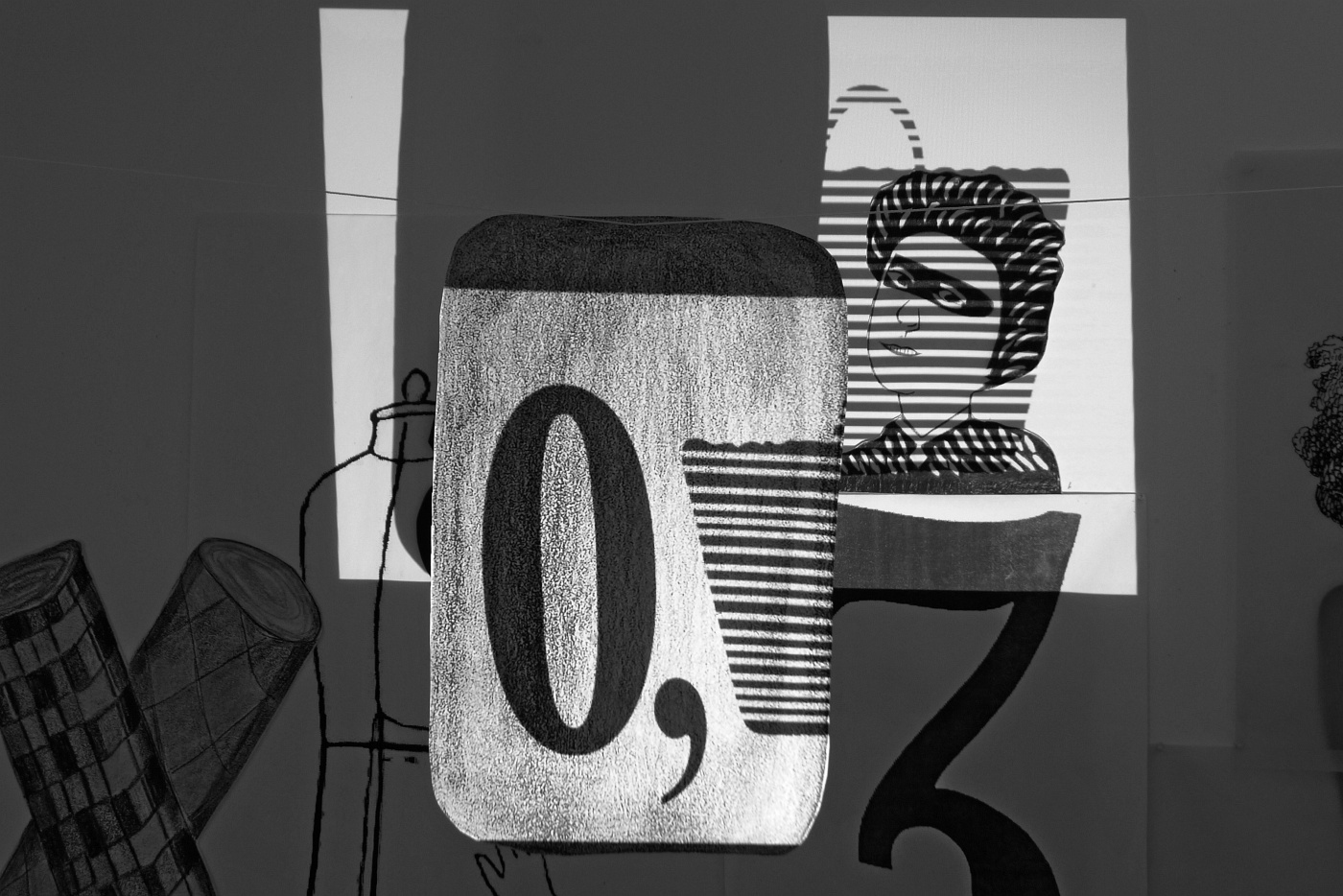
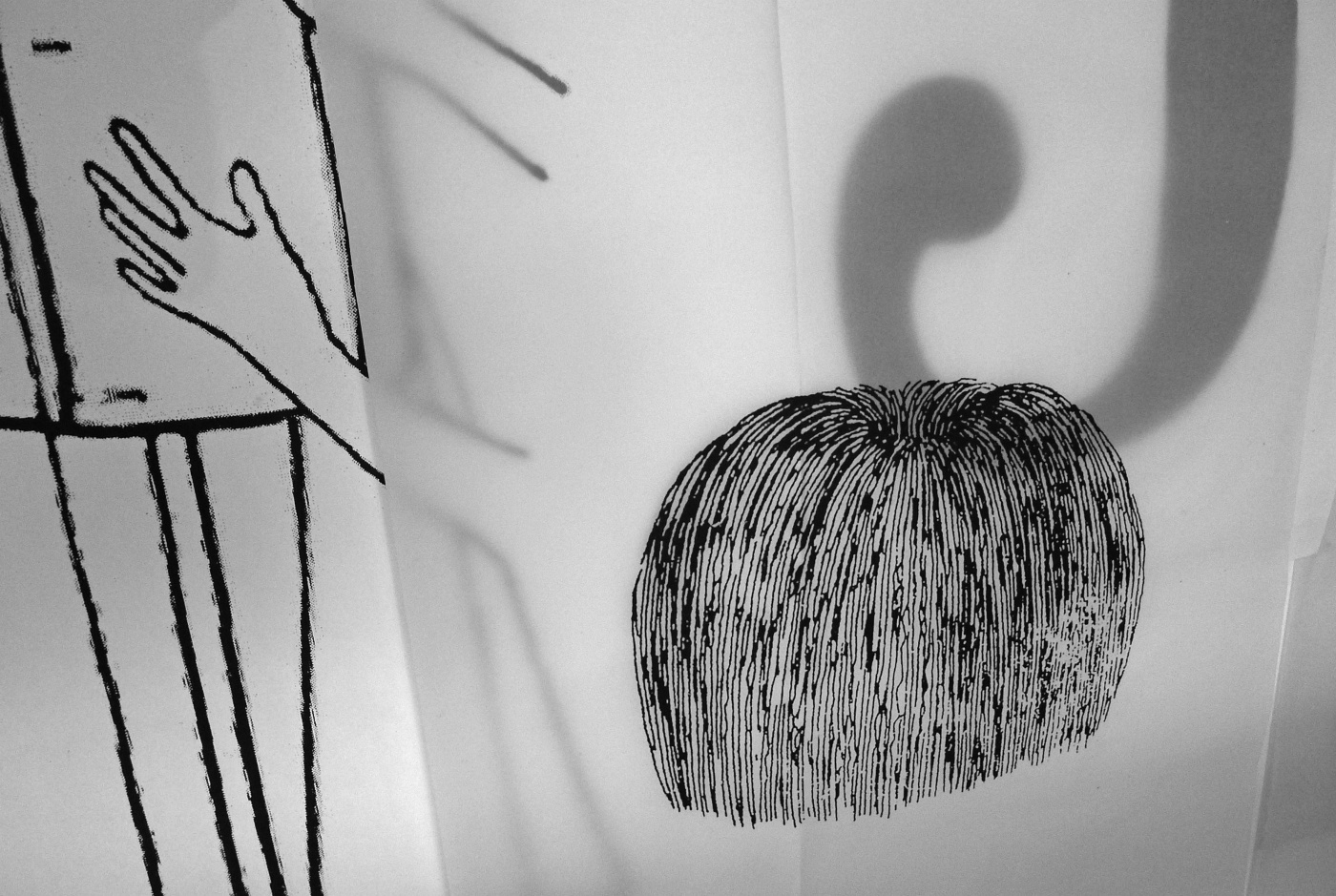
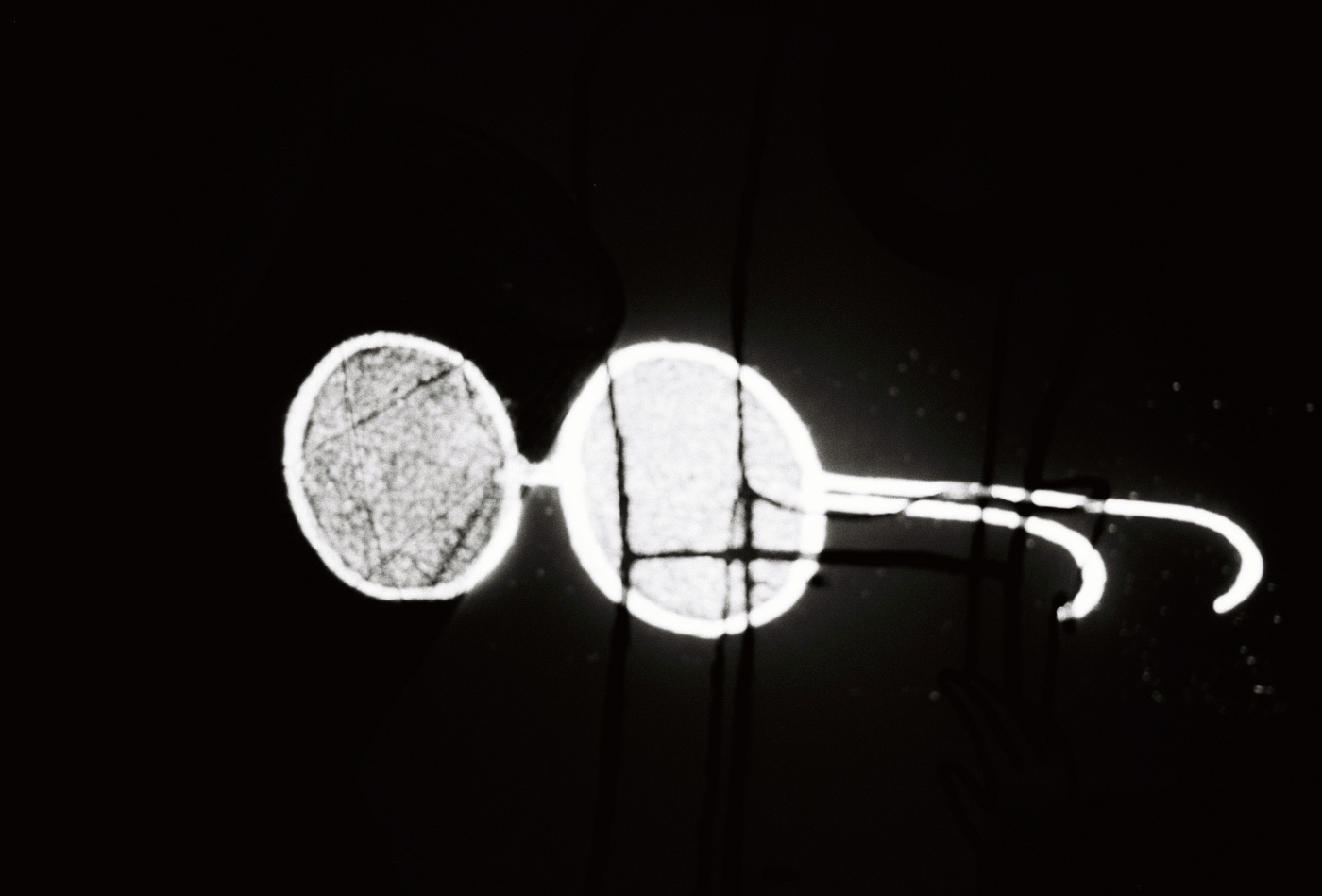
The photo series The Eye of the Needle consists of improvisations featuring Lublin-related themes presented as projections and wall drawings. The motifs reflect the frequency of the city’s geographical location as well as the still-palpable Jewish imprint on Lublin. In this project, too, excerpts from Diderot and D’Alembert’s Encyclopédie play a role as semiotic amplifiers.
Poster, Lublin 1927
The Eye of the Needle, photo series,
Lublin 2019
The Eye of the Needle, photo series,
Lublin/ Vienna 2019-2025
dressing room
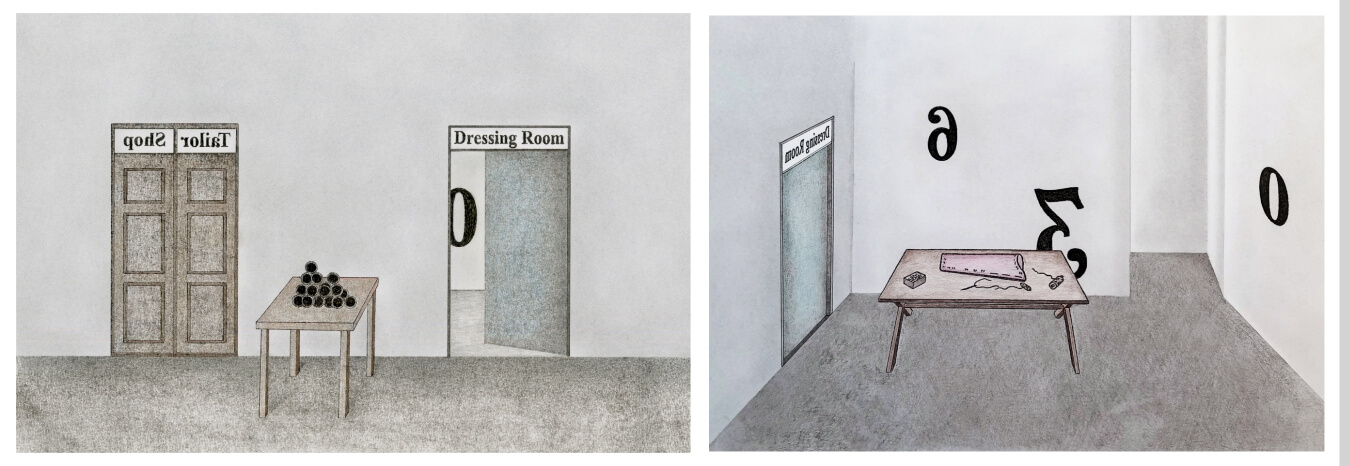
dressing room, details, Warsaw/ Dresden 2025
Further concepts drawn from the pool of motifs are developed in drawings, such as a series titled Dressing Room in which the theme of tailoring recurs as a re-measuring of clothing for a shifting subject.
Here, numbers function as qualitative archetypes of order (C.G. Jung) and as metaphors of the Enlightenment (Horkheimer/Adorno). They act as figures or “frozen agents” within processes of abstraction.
Literature:
Alfred Sohn-Rethel: The Form of the Commodity and the Form of Thought, Suhrkamp 1978
Hannah Arendt: Vita Activa: On the Active Life, from the chapter ‘The Processual Nature of Action’, Munich: Piper, 1989
Denis Diderot/ Jean le Rond d’Alembert (eds.): Encyclopédie ou Dictionnaire raisonné des sciences, des arts et des métiers, unaltered reprint of the 3rd edition published in 1775, Saarbrücken: Finis Mundi, 2010.
Ulrike Grossarth: Stefan Kiełsznia. Ulica Nowa 3, Street Photographs from the Jewish Quarter of Lublin in the 1930s. Leipzig: Spector Books, 2011
Ulrike Grossarth: School of Lublin, (ed.): Anja Casser, Badischer Kunstverein, Munich: edition metzel, 2023
Zofia Ołpińska-Prędecka: Nauka modelowania, kroju i szycia, Warschau: Wzór, 1937
Wolfgang Pauli und Carl.G. Jung: A Correspondence 1932–1958, Springer-Verlag, 1992
Max Horkheimer/ Theodor W. Adorno: Dialectic of Enlightenment, Frankfurt am Main: Fischer-Verlag, 1988